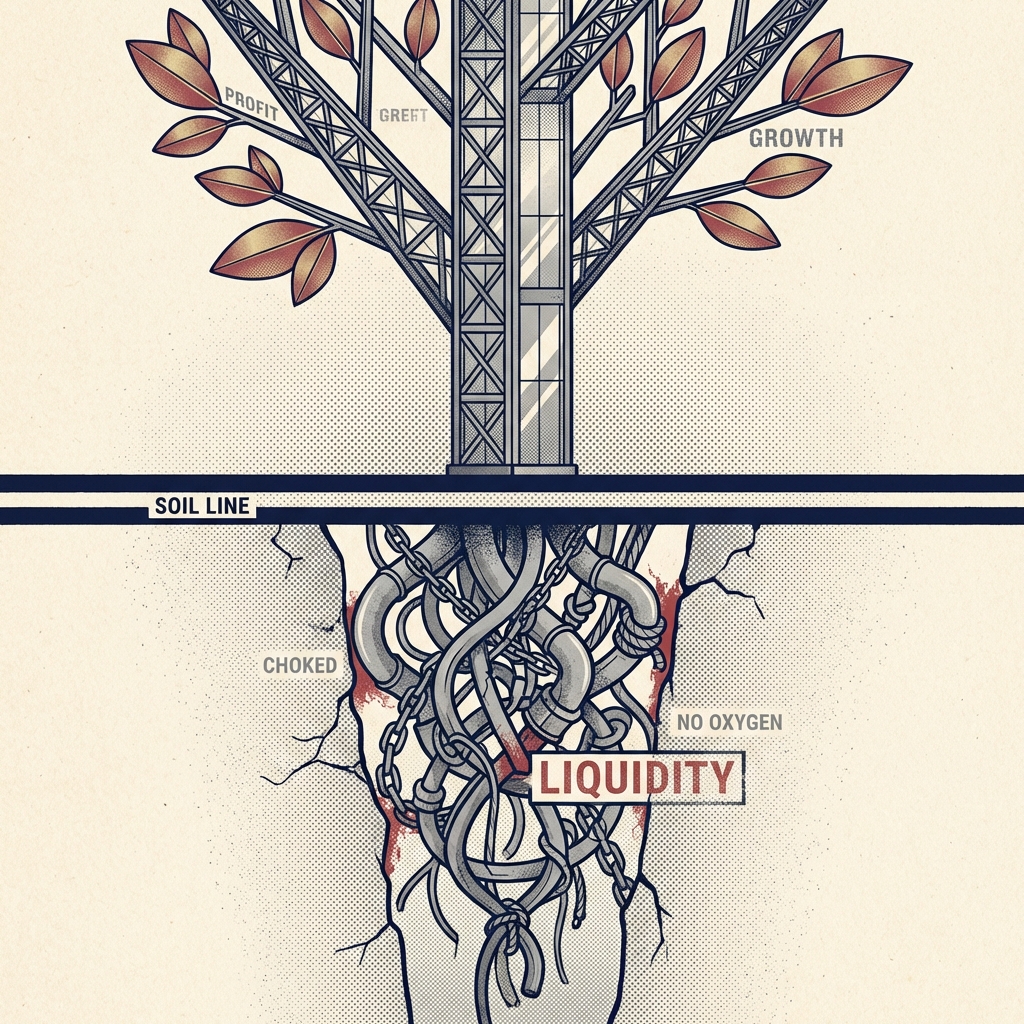
Hero
Strategic Briefing

Cash Flow Is The Oxygen of Business — Stop Treating It Like a Result

Most leaders treat cash as a result of profit. It isn't. Cash is a separate system that requires its own design and daily attention.

Audio Insight
Listen to the briefing
0:23
Download / Open Audio Audio failed to load. Please use Download / Open Audio.
SimplifyNumbers.com
Strategic Analysis | 2026 Edition

Cash Flow Is The Oxygen of Business — Stop Treating It Like a Result

Most leaders treat cash as a result of profit. It isn't. Cash is a separate system that requires its own design and daily attention.

Executive Summary

Cash flow is the lifeblood of any business, yet it's often treated as a mere consequence of profit. This is a critical error. In reality, cash flow operates as an independent system that demands deliberate design and continuous monitoring. Ignoring this can lead to unexpected liquidity crises, even amidst profitability. This analysis will explore common pitfalls and provide actionable steps to ensure your business thrives.

Profit vs. Cash
Divergence
Profitability does NOT guarantee healthy cash flow. Monitor them separately.
Growth Paradox
Cash Consumption
Rapid growth often strains cash reserves. Plan for it.
Resilience
Cash Buffer
A sufficient cash buffer is your best defense against unforeseen shocks.

Core Strategic Insight

The Thesis: Cash flow isn't just a byproduct of a profitable business; it's a distinct operational system that requires proactive management. Ignoring this distinction is like ignoring the need to breathe, assuming it will happen automatically just because you're working hard.

Diagnostic Analysis: The Mechanisms

Many businesses struggle with cash flow despite showing a profit. This stems from a few common traps and broken mechanisms:

The Profit Illusion

Confusing Profit with Cash

Profit is an accounting concept, often based on estimates and accruals. Cash is tangible and immediately available. Confusing the two leads to poor decisions.

Growth Blindness

Ignoring Cash Consumption

Many businesses assume that growth automatically improves cash flow. However, expansion often requires upfront investment in inventory, personnel, and marketing, which consumes cash.

Working Capital Neglect

Inefficient Cash Conversion

Poor management of accounts receivable, accounts payable, and inventory ties up cash and slows down the cash conversion cycle.

The Shock Vulnerability

Lack of Cash Buffer

Without a sufficient cash reserve, businesses are highly vulnerable to unexpected economic downturns, customer losses, or operational disruptions.

Strategic Implications

Treating cash flow as an afterthought is a strategic risk. It leads to misallocation of resources, missed opportunities, and increased vulnerability to financial distress. Prioritizing cash flow management transforms your business from reactive to proactive, ensuring long-term sustainability.

Interactive Exhibits

Exhibit 1: Trend Analysis
Interactive Model
Hypothetical data showing increasing profitability coupled with declining cash flow, illustrating the divergence between the two.
Exhibit 2: Strategic Matrix
Categorization
Sustainable Growth Click for details
Profitability Trap Click for details
Survival Mode Click for details
Distress Zone Click for details

Execution Roadmap

To transform your approach to cash flow management, follow these actionable steps:

1
Daily Cash Visibility
Implement a system for tracking daily cash inflows and outflows. Use a simple spreadsheet or dedicated cash management software.
2
Cash Flow Forecasting
Develop a rolling 13-week cash flow forecast to anticipate future cash needs and identify potential shortfalls.
3
Working Capital Optimization
Analyze and improve your accounts receivable, accounts payable, and inventory management processes.
4
Customer Payment Terms
Negotiate favorable payment terms with customers and offer incentives for early payments.
5
Supplier Payment Terms
Extend payment terms with suppliers to free up cash and improve your cash conversion cycle.
6
Inventory Management
Reduce inventory levels and optimize your ordering process to minimize cash tied up in stock.
7
Expense Reduction
Identify and eliminate unnecessary expenses to improve your cash flow.
8
Contingency Planning
Establish a cash reserve or line of credit to prepare for unexpected expenses or revenue shortfalls.
9
Regular Monitoring
Monitor your cash flow performance regularly and adjust your strategies as needed.
10
Professional Advice
Seek advice from a financial advisor or consultant to improve your cash flow management practices.